- 内容简介:
-
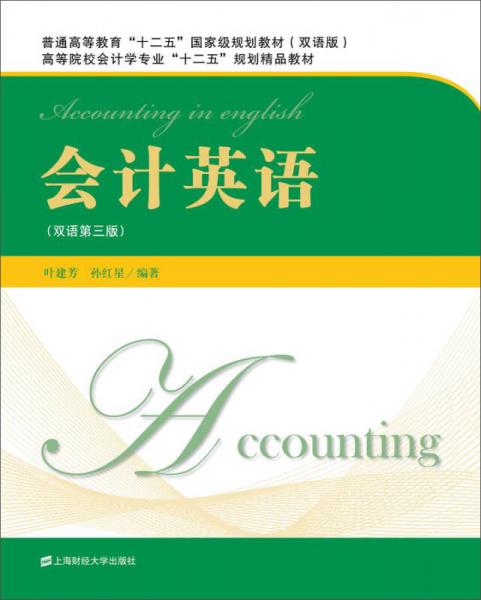
《会计英语》(双语第三版)作为“十一五”和“十二五”国家级规划教材《会计英语》的双语版,秉承了其特点,结构上分为十章:第一至第三章是对会计的性质以及会计信息产生过程的叙述;第四章是商业企业会计;第五至第九章是关于资产、负债和所有者权益的确认、计量和报告;第十章是关于有关企业经营活动对现金流量表的影响,以及如何编制现金流量表。
为保持我国企业会计准则与国际财务报告准则的持续趋同,进一步完善我国企业会计准则体系,提高财务报表列报质量和会计信息透明度,2014年伊始,财政部发布了3个新的准则和修订了5项具体会计准则。本书针对新的准则以及变化,第三版的相应内容做了一些修订,修订的内容主要涉及投资业务(第七章第二节)。
- 目录:
-
div>1 An Introduction to Accounting
1.1 Accounting is an Information System
1.2 Forms of Organization
1.3 The Framework for the Preparation and Presentation of Financial
Statements
1.4 Understanding of Financial Statements
Balance Sheet
Income Statement (Statement of Financial Performance)
Statement of Owner's Equity
Statement of Cash Flows
1.5 Accounting and its Profession
1.6 Accounting Elements and Using the Accounting Equation
What is Accounting Equation
Effects of Transactions on the Accounting Equation
1.7 Ethics in Accounting
Some Basic Ethical Standards
Vocabulary
Self-Test Questions
Discussion Questions
Exercises
Problems
2 Recording Transactions
2.1 Economic Events and Business Documents
2.2 T Accounts and Debit & Credit
Types of Accounts
Chart of Accounts and Ledger
The Accounting Equation and the Rules of Debits and Credits
Normal Balances
2.3 Journalizing and Posting Transactions
Journalizing Transactions
Posting Transactions
2.4 Preparing a Trial Balance
Trial Balance
Locating and Correcting Errors
Formatting Conventions
2.5 Using the Information-the Debt Ratio
Vocabulary
Self-Test Questions
Discussion Questions
Exercises
Problems
3 Adjusting the Accounts, Preparing the Statements, and Completing the
Accounting Cycle
3.1 The Need for Adjustments
Time Period Principle
Need for Adjustments at the End of an Accounting Period
Accrual and Cash Basis of Accounting
3.2 Adjusting the Accounts
Prepaid Expenses
Depreciation
Unearned Revenues
Accrued Expenses
Accrued Revenues
3.3 Adjusted Trial Balance and Preparation of Financial Statements
3.4 Using the Worksheet
Purpose of the Worksheet
Preparing Worksheets
3.5 Closing Entries
Purpose of Closing Entries
Preparing the Closing Entries
3.6 Post-closing Trial Balance
3.7 Classification of Balance Sheet Items
Assets
Liabilities
Owner's Equity
3.8 Using the Information-the Current Ratio
Vocabulary
Self-Test Questions
Discussion Questions
Exercises
Problems
4 Accounting for Merchandising Enterprises
4.1 Service Enterprise versus Merchandising Concern
Service Enterprise
Merchandising Enterprise
Periodic and Perpetual Inventory Systems
4.2 Purchase, Sales Revenue and Cost of Goods Sold
Merchandise Purchases-Perpetual Inventory System
Purchase Returns and Allowances
Trade Discounts
Purchase Discounts
Transportation Costs
Revenue from Sales and Cost of Goods Sold-Perpetual Inventory System
Sales Returns and Allowances
Sales Discounts
Shrinkage
Summary of Merchandising Cost Flows
4.3 Multiple

 占位居中
占位居中



 直播中,去观看