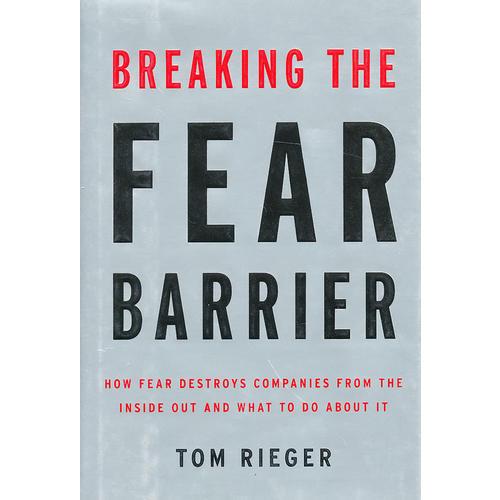
This book takes the reader through a journey of how fear ofloss progressively creates barriers and bureaucracy that inevitablycause companies to fail, and what leaders needs to do to overcomethese seemingly impenetrable walls. The greatest threat to anorganisation's success is not always the competition. Often, it iswhat a company does to itself. Because of fear, companies becomeplagued with barriers and bureaucracy that limit success, crushemployees, and infuse frustration and a sense of futility acrossthe enterprise. It starts with a narrowing of focus, which leads tothe first level of bureaucracy: parochialism. Parochialism existswhen managers and departments begin to view the world through thefilter of their own little silo, and build walls make of rules andpolicies to protect their turf. As businesses grow and become morecomplex, the second level of bureaucracy is reached:territorialism. While parochialism is about protecting a departmentfrom outsiders, territorialism is about controlling those insidethe silo. The third and final level of bureaucracy is empirebuilding, which is a response to perceived threats to adepartment's ability to be self-sufficient. These barriers costorganizations a fortune in inefficiency, turnover, waste, anddemoralization. Tearing down these barriers is difficult, but itcan be done. Parochialism can be eliminated by resetting rules andpolicies, and refocusing on the ultimate mission of theorganization. Territorialism can be eliminated by creating trueempowerment, along with appropriate levels of accountability.Empire building can be addressed through shared goals and a set ofguiding principles to help act as a referee in decision making. Butthat's not enough. Managers must also create a culture of courage,to enable employees to take advantage of these new freedoms andaccountabilities. Courage killers must be rooted out, and dealtwith swiftly and strongly. Finally, leadership must refocus onmission success rather than just checking off their part of theprocess, manage reference points, and engage employees. By doingall of these things, an organization can become fearless, andunstoppable.

 占位居中
占位居中





 直播中,去观看